


 Listen Live
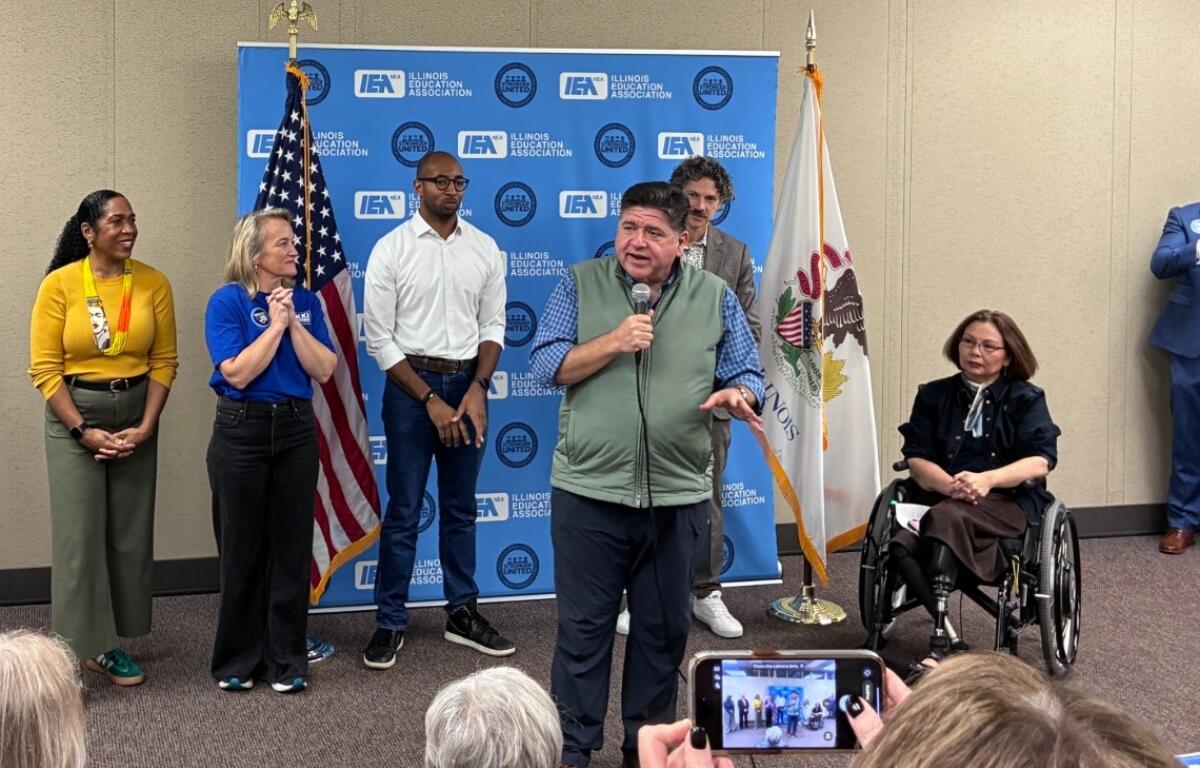

(CAPITOL NEWS ILLINOIS) – Illinois will not participate in the federal government’s controversial scholarship tax credit program, Gov. JB Pritzker announced Tuesday.
The Federal Scholarship Tax Credit, passed under the One Big Beautiful Bill Act in 2025, is a dollar-for-dollar nonrefundable federal tax credit for donations of up to $1,700 a year, or $3,400 per married couple, to authorized scholarship-granting organizations. Scholarships under the tax credit do not have a cap and are decided by the donor organizations.
The organizations distribute scholarships to eligible families, whose income must be below 300% of their area’s median income. Families can then decide to spend their scholarships on expenses for private, public and charter schools, according to the U.S. departments of Education and Treasury. States faced a Jan. 1 deadline to opt in.
Though Republicans and President Donald Trump view the program as a way to give children a more affordable way to attend private schools, the scholarship can also be used to cover other costs such as tutoring and books for public school students. The tax credit only applies at the federal level and states that participate are not subject to extra costs.
The plan was adamantly opposed by many teachers’ unions and public education advocates. Pritzker said participating in the program would divert attention and resources away from public schools, and that he believes some private schools practice discrimination.
“At a time when public school education needs investments more than ever, we should not siphon money from public schools for private education — especially as the Trump Administration’s policies decimate education,” Pritzker said. “We have a responsibility to do right by all of our students. Taxpayer funding should not subsidize donations to private schools that could discriminate based on religion, sexual orientation, or other characteristics.”
Pritzker provided several reasons he declined to allow Illinois to join the program: The program does not allow states to set guidelines and standards for organizations that give out scholarships, reduces money available for the federal government that Pritzker argues should be used for education, incentivizes private education and, doesn’t guarantee lower-income students will benefit because families with three times the median income are eligible.
Illinois is in the minority of states on the issue, however. At least 30 states, including some led by Democratic governors, have joined the program.
Another blow to private schools
Pritzker’s decision is the second blow to private schools during his second term.
Illinois had its own tax credit program known as Invest in Kids, which was created in 2017 as part of a compromise between former Republican Gov. Bruce Rauner and state legislative Democrats that paved the way for the evidence-based funding reform law. The program offered a 75% income tax credit to those who donated to private school scholarships. The program was capped at $75 million annually.
It was controversial from the beginning with progressive lawmakers and teachers’ unions opposing for the same reasons they oppose the federal program. Lawmakers decided to let the program sunset at the end of 2023 despite a fierce lobbying effort by supporters. Pritzker opposed the program as a candidate in 2018 but said in 2023 that he would have signed an extension if it had reached his desk.
The Catholic Church is one of the state’s largest operators of private schools and has been a key proponent of programs like Invest in Kids and the federal tax credit. The Catholic Conference of Illinois said in a statement that they are “perplexed” by the decision because the scholarship can be used in public schools. They also pointed to Pritzker’s 2023 statement, believing that indicated support for the concept.
“Gov. Pritzker still has time to reconsider this decision to give Illinois students extra resources without taking anything away from current state budget needs,” the conference said in a statement. “There are clear and compelling reasons to change course. We urge him not to squander this opportunity by putting politics ahead of school children. Our Illinois families deserve better.”
Republicans were also disappointed by the decision.
“I am extremely disappointed that Gov. Pritzker once again had a chance to put Illinois students first, but instead he chose to play politics,” Senate Republican Leader John Curran, R-Downers Grove, said in a statement. “This program offered free money to help struggling Illinois students and their families. The program has overwhelming support from people across the ideological spectrum. This was not a partisan issue, but the governor decided to try to score national political points instead of doing what’s best for the people of Illinois.”
Unions, public school advocates celebrate
Teachers’ unions and supporters of public education praised the decision.
“Trump’s voucher scheme was built to pull money out of public education with zero oversight and zero educational benefit for students,” Illinois Federation of Teachers and Chicago Teachers Union president Stacy Davis Gates said in a statement. “Illinois’ 1.8 million public school students deserve better, and today they got it. Gov. Pritzker did the right thing in rejecting Trump’s voucher program.”
Many groups and lawmakers reacting to the decision compared the program to a scam.
“Under resourced public schools in Illinois need sustainable funding, including full federal funding for students with disabilities promised decades ago — not tax code gimmickry designed to subsidize wealthy families,” Illinois Families for Public Schools Executive Director Cassie Creswell said in a statement.
State officials also praised Pritzker’s decision.
“The federal government should be in the business of strengthening public schools, not using scarce resources to promote school choice,” Illinois Superintendent of Education Tony Sanders said a statement.
Several state lawmakers also said it was the right move, including Sen. Mary Edly-Allen, D-Libertyville, a former teacher who chairs the Senate Higher Education Committee.
“Illinois’ decision to forgo participation in the Federal Scholarship Tax Credit program reflects our commitment to supporting public education and ensuring every student has the opportunity to succeed, no matter where they live or how much money their family makes.”
Jerry Nowicki and Brenden Moore contributed to this report.
Capitol News Illinois is a nonprofit, nonpartisan news service that distributes state government coverage to hundreds of news outlets statewide. It is funded primarily by the Illinois Press Foundation and the Robert R. McCormick Foundation.