


 Listen Live
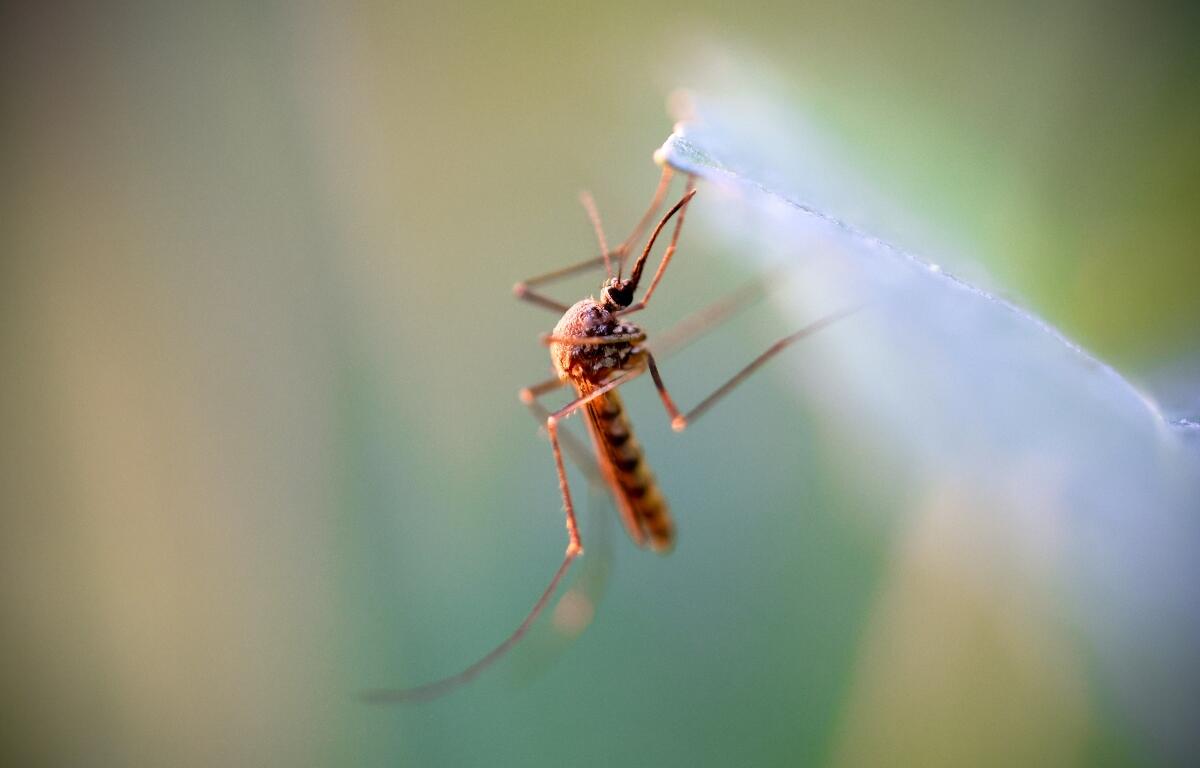

Taylorville, IL (WAND) – As mosquito season reaches its peak in central Illinois, the Christian County Health Department is ramping up its surveillance efforts, testing mosquitoes each week for West Nile virus to help identify potential risks before people become sick.
The department’s vector control team collects mosquitoes from traps placed throughout the county, then sorts and tests them in a laboratory for the virus. The surveillance program provides an early warning system, allowing public health officials to monitor mosquito populations and inform residents if the risk increases.
Lead and Vector Inspector Ryan Bowsher said the process begins with separating mosquitoes before testing them for West Nile virus.
“We have to separate the mosquitoes between male and female. And then we want to make sure that they’re not young,” he explained.
According to the Centers for Disease Control and Prevention, West Nile virus is the leading cause of mosquito-borne disease in the contiguous United States. Mosquitoes become infected after feeding on infected birds and can then transmit the virus to people through their bites. Most people who become infected never develop symptoms, but some experience flu-like illness, while a small percentage can develop severe neurological disease. Older adults and people with weakened immune systems are at greater risk for serious illness.
Bowsher said monitoring mosquito populations is especially important during the summer months when virus activity is typically at its highest.
“The summer is really going to be the peak times for West Nile,” he said.
The health department conducts surveillance on a weekly schedule. Traps are set at the end of the week, collected after the weekend and mosquitoes are tested shortly afterward.
“We test once a week,” Bowsher said. “We set out our traps on Friday, and then we collect them on Monday and test on Tuesdays. So we’re always checking to make sure that the West Nile virus numbers are down.”
Testing helps officials detect the virus, and if a test is positive, they can notify the community.
“We test for West Nile just because it could be very detrimental for people in susceptible populations,” Bowsher said. “If they’re elderly, if they’re young, it can make them very ill. So we really just test to make sure that the numbers are down and so people can be safe if they’re outside.”
West Nile virus naturally circulates between birds and mosquitoes. When mosquitoes feed on infected birds, they can pick up the virus and later transmit it to humans. People who become infected cannot spread the virus to other mosquitoes because humans are considered “dead-end hosts.”
Although most infections cause no symptoms, those who do become ill may experience fever, headache, body aches, nausea, vomiting, diarrhea, or rash.
The Christian County Health Department said residents don’t have to avoid spending time outdoors, but they should take precautions to reduce mosquito bites.
“It’s advised that you stay indoors between dusk and dawn,” Bowsher said. “If you do go outdoors, make sure to limit skin exposure, wear an EPA-registered insect repellent … and wear lighter-colored clothes just because mosquitoes are less attracted to those.”
The CDC also recommends eliminating standing water around homes, including water that collects in flowerpots, buckets, birdbaths, gutters and old tires, where mosquitoes can breed. Using EPA-registered insect repellents containing ingredients such as DEET, picaridin or oil of lemon eucalyptus also helps reduce the risk of mosquito bites.
For Bowsher, the department’s surveillance program is about allowing people to safely enjoy the outdoors while providing another layer of protection for the community.
“We put an effort into it just because it is something that can be an issue,” he said. “We really just want to make sure that people are safe when they’re outdoors, and that they’re able to enjoy being outside without having to be concerned about mosquitoes.”