


 Listen Live

Springfield, IL (CAPITOL CITY NOW) – Time was, the state collected a one percent grocery tax and redistributed the money back to cities. The state’s taken that away, leaving cities to either levy their own grocery tax or do without.
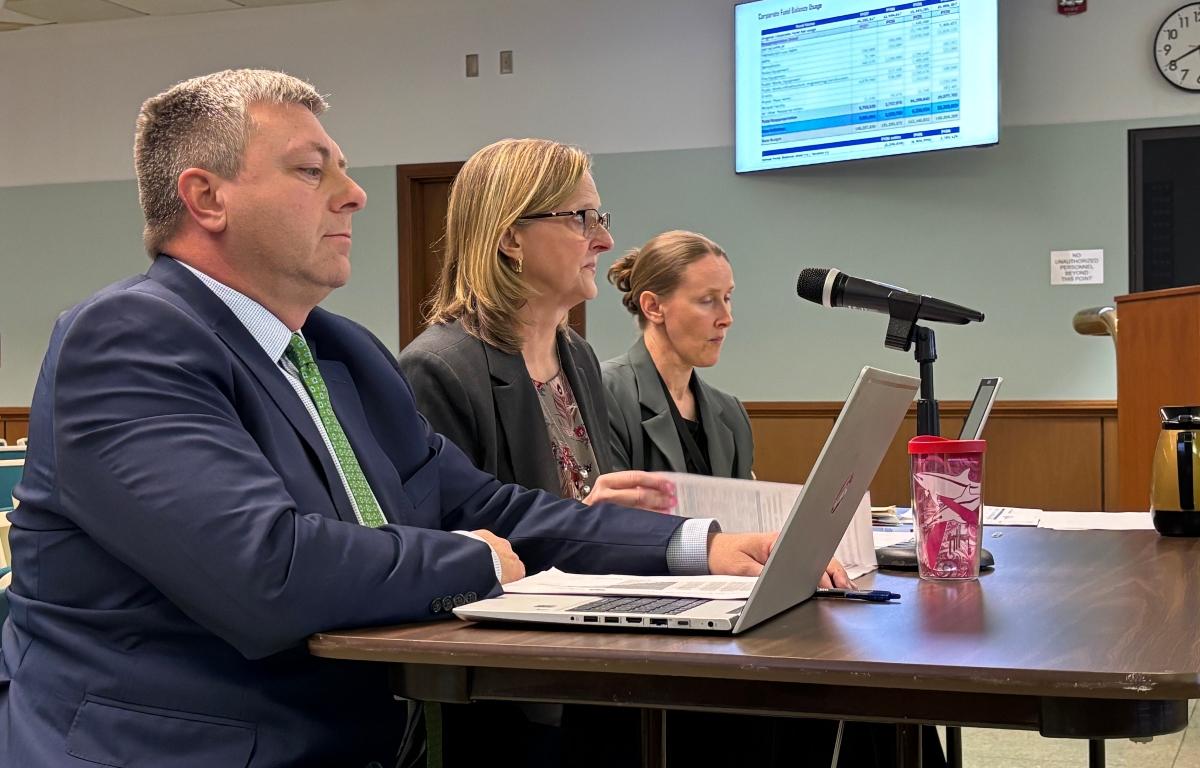
Springfield’s mayor and budget director are planning on the latter for the twelve months beginning March 1. “The loss (to the city) is estimate between $4.8 to $5.2 million a year,” said budget director Ramona Metzger (pictured, center), kicking off the first of three budget workshops for aldermen. “According to Illinois Municipal League research, 737 municipalities have enacted a replacement local grocery tax.”
For now, Springfield will not be one of them. Springfield Mayor Misty Buscher told Capitol City Now after Wednesday’s hearing the plan is for the city to live within its means.
Metzger says groceries join other things Springfield does not tax nunicipally: food and beverages, liquor, natural gas, motor fuel. The implication is that there are many options if aldermen do indeed want to further tax people. What’s more, property taxes are now collected at 94 cents per $100 equalized assessed valuation. Comparable cities, says Metzger, average $1.33. Just moving up to that average would raise $11.5 million.
The administration’s proposed corporate fund budget is $176.8 million.
Budget hearings continue Thursday and Jan. 22.