


 Listen Live

LINCOLN, Ill. (WAND) – For 47-year-old David Helm, a full night in bed did not always mean a good night’s sleep.
Helm said his wife often noticed him waking himself up with loud snoring. After a sleep study, he was diagnosed with obstructive sleep apnea, a condition that causes the airway to become blocked during sleep.
For more than a decade, Helm slept with a continuous positive airway pressure, or CPAP, mask. But he said he continued to feel tired and struggled with the mask.
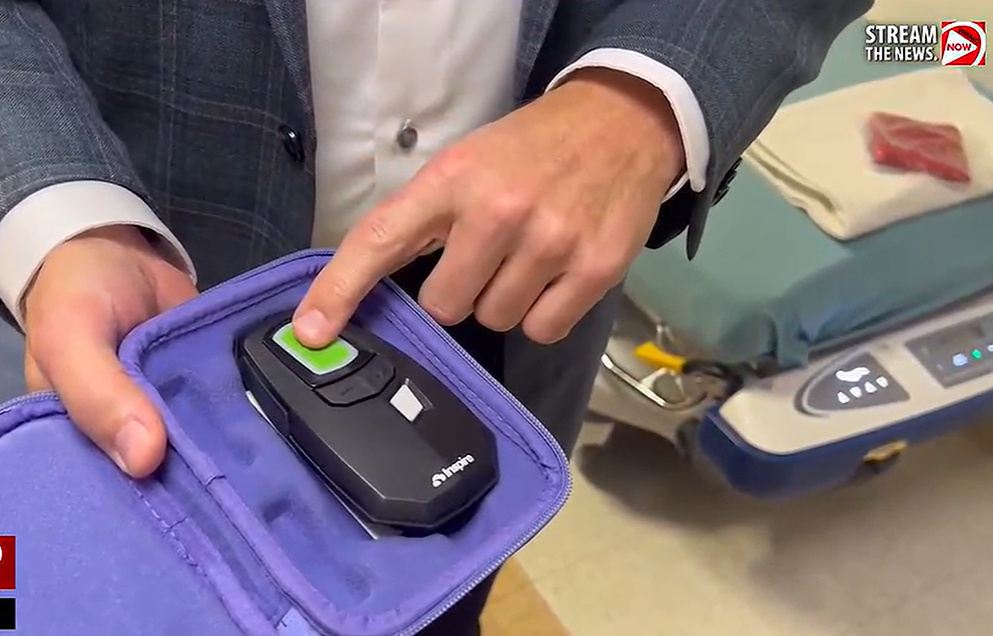
Now, Helm says an implant called Inspire has helped him sleep better. He received the device during an outpatient procedure at Lincoln Memorial.
After about 60 days using Inspire, Helm said he felt a difference. He said he no longer snores and feels more energized. His wife has also been able to sleep at home, he said.
Todd Mourning with Lincoln Memorial said the device uses an implanted stimulator and a wire to stimulate a nerve that controls the tongue. That helps keep the tongue from falling back and blocking the airway during sleep.
The stimulator’s battery can last 10 to 12 years before it needs replacing, according to Mourning. He said patients need sleep tests and other medical evaluations to determine whether they qualify for the implant.
Cost and insurance coverage can also affect access. Mourning said the procedure can be expensive if insurance does not cover it. He said he believes Medicare covers the treatment, though patients should check their individual coverage and eligibility.
For Helm, having treatment available closer to home means fewer trips to appointments and one less barrier to better sleep.
“Not having to travel for all of those doctor’s appointments is huge,” Helm said.