


 Listen Live
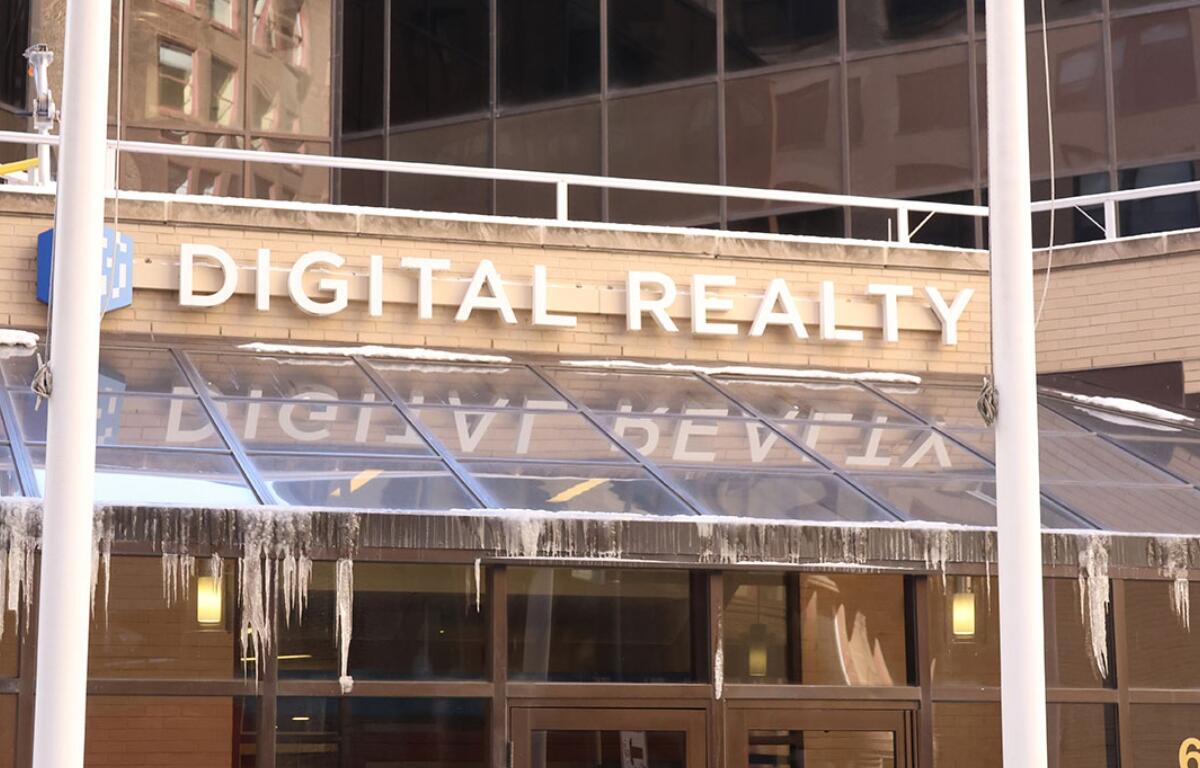

Springfield, IL (CAPITOL NEWS ILLINOIS) – Managing data centers has been a growing issue around the U.S. as states balance economic development with community concerns about pollution, water supply and energy prices.
That has led to different regulations nationwide from moratoriums on development permits to putting data centers in their own ratepayer class. Illinois legislators have proposed regulating data centers with the POWER Act, a bill that addresses concerns about prices, water and pollution by:
- Requiring data centers to pay for their own energy and the infrastructure to generate it, and requiring that energy to come from renewable sources.
- Mandating transparency from data centers about their water use and water permits from the Illinois Environmental Protection Agency, which would manage how data centers handle wastewater and meet efficiency standards.
- Requiring the IEPA to conduct assessments about how a data center would impact a community and mandating data center developers enter community benefits agreements that promote transparent engagement with the public. The community benefits agreements will be enforced by a coalition of residents, organizations and local government officials who will make up a community advisory board.
Democratic lawmakers sponsoring the bill call the regulations “commonsense” guardrails on a growing industry that impacts communities and electricity prices.
“Obviously, we know that data centers can provide economic development. But on the other hand, I want to make sure that our environment is protected and our people are protected,” said Illinois House Majority Leader Robyn Gabel, D-Evanston.
While data center backers say the economic benefits include job creation, capital investments and property tax revenue, environmentalists and consumer advocates say they are far outweighed by the risks for water resources and energy prices.
The POWER Act thus far remains in committee. But Illinois has a history of passing large-scale energy packages, such as the Climate and Equitable Jobs Act and the Clean and Reliable Grid Act, as extensive amendments late in their regular or fall legislative session. The session is slated to adjourn on May 31.
Growing need for rules
Aurora is one Illinois city already regulating data centers. The city in September implemented a 180-day moratorium on development that will expire in late March.
The city set the pause so it could study the fiscal, environmental, stormwater and utility impacts on the community and come up with better rules and safeguards.
In late February, Aurora proposed ordinances that would require developers to conduct and submit multiple studies dealing with noise, water consumption and energy needs. The ordinances also require future data centers to meet standards for noise, vibrations, water use and energy use. New and expanded data centers “will also need to install and operate either on-site renewable energy techniques or on-site resilience storage procedures.”
The POWER Act has similar requirements, and negotiations on the bill are ongoing. Those conversations include municipalities and workforce, labor, manufacturing and environmental groups.
“What we’re asking for in this legislation are principles that I think, widely, people understand,” said state Sen. Ram Villivalam, D-Chicago.
“Accountability protects our taxpayers and protects our environment. That’s, I believe, entirely possible,” he continued.
Technology is an essential part of many people’s lives, and the data centers needed to support that technology will continue to exist and expand, Villivalam said.
“We’re not saying ‘no.’ We’re saying this is going to continue. This is how we need to approach it,” he said.
Agreement between the governor and feds
Protecting consumers from paying for data centers’ energy needs is a key part of the POWER Act, and shifting the cost to the data centers has widespread, bipartisan support in Illinois and nationwide.
During his annual budget address, Gov. JB Pritzker put the onus on PJM Interconnection, the electric grid operator that covers all or part 13 states from Illinois to the East Coast: “PJM must force data center developers to pay for capacity resources to power their operations to protect consumers from higher rates.”
Pritzker also proposed a two-year pause on tax credits for new data centers to compensate for rising demand and higher prices. Illinois has provided tax incentives for data centers since Pritzker signed bipartisan legislation in 2019. According to the state’s 2024 report, at least 27 data centers had received incentives totaling $983 million in estimated lifetime tax breaks and benefits.
“With the shifting energy landscape, it is imperative that our growth does not undermine affordability and stability for our families,” Pritzker said.
Pritzker has long advocated for attracting data centers to Illinois, especially given his focus on growing quantum computing, but he lately has said he also wants development to be controlled.
In January, Pritzker joined the Trump administration and 12 other governors in the PJM service area to call for PJM to adopt six principles to lower electricity prices. One principle would require PJM to allocate the cost of “any new” capacity to data centers.
Tech companies in early March signed a voluntary, nonbinding “Ratepayer Protection Pledge” at the White House, agreeing to cover the majority of costs for data center energy, though the pledge does not include penalties or other enforcement language. Seven companies have signed, including Google, Amazon, Microsoft and Meta. President Donald Trump announced the pledge during his State of the Union address.
In a separate letter, Pritzker and New Jersey Gov. Philip Murphy clarified to PJM that “implementation of these principles must also ensure that clean, cheap energy growth will not be sabotaged.”
Cautious support from Republicans
Illinois Republicans have also called for data centers to pay for their own energy generation, though their support for the POWER Act isn’t guaranteed and they don’t share a commitment that energy generation come from renewable sources.
“While data centers have become part of the broader energy discussion, they are not the primary driver of the rate increases families have been experiencing,” said Sen. Sue Rezin, R-Morris. “At the same time, I believe large energy users should pay their fair share and that our grid must remain secure and dependable.”
Rezin sits on the committees that will likely discuss the POWER Act and she said she’s open to “thoughtful, targeted proposals” for handling data centers, but she also wants to ensure companies aren’t dissuaded from investing in Illinois.
Her concern is similar to that of groups like the Illinois Manufacturers’ Association, which framed the POWER Act as “penalizing innovation” in a news release after it was announced. They also advocated for dealing with energy prices by pursuing an “all-of-the-above energy approach” to generation.
However, Gabel said she’s had conversations with groups like the IMA, and they’ve indicated they’re open to negotiation.
“I have spoken to both the IMA and the Data Center Coalition, and they both say that there’s much in this bill that that they can work with,” she said. “There may be a few issues that we need more discussion about, but neither of those organizations felt like this was DOA.”
Considering how many other states have data center regulations, Gabel said she thinks concerns about scaring away development are overblown.
“I’ve met with data centers, and they are open to this,” she said.
The Clean Jobs Coalition, a group of organizations committed to renewable energy favors the bill but also supports negotiation.
“We also know that data center development in Illinois to date has not delivered a fair deal for families, who have paid millions in tax incentives while subsidizing Big Tech’s utility costs,” the group said in a statement. “The POWER Act is an opportunity to reconcile that imbalance moving forward and will need further discussion and consideration among stakeholders.”
A big reason for the urgency, Gabel said, is that data centers built elsewhere in the PJM territory would impact what Illinoisans pay anyway, even if the centers aren’t built in Illinois. That’s because all states in that territory pull from the same energy pool.
“We feel like it’s our responsibility to put some guardrails around the development of these data centers,” she said.
The bill language is now in the House Executive Committee, which meets Thursday at 10 a.m. and the Senate AI and Social Media Subcommittee, where senators will discuss multiple bills regulating data centers, though negotiations could come down to the wire if recent history is a guide.
Capitol News Illinois is a nonprofit, nonpartisan news service that distributes state government coverage to hundreds of news outlets statewide. It is funded primarily by the Illinois Press Foundation and the Robert R. McCormick Foundation.