


 Listen Live
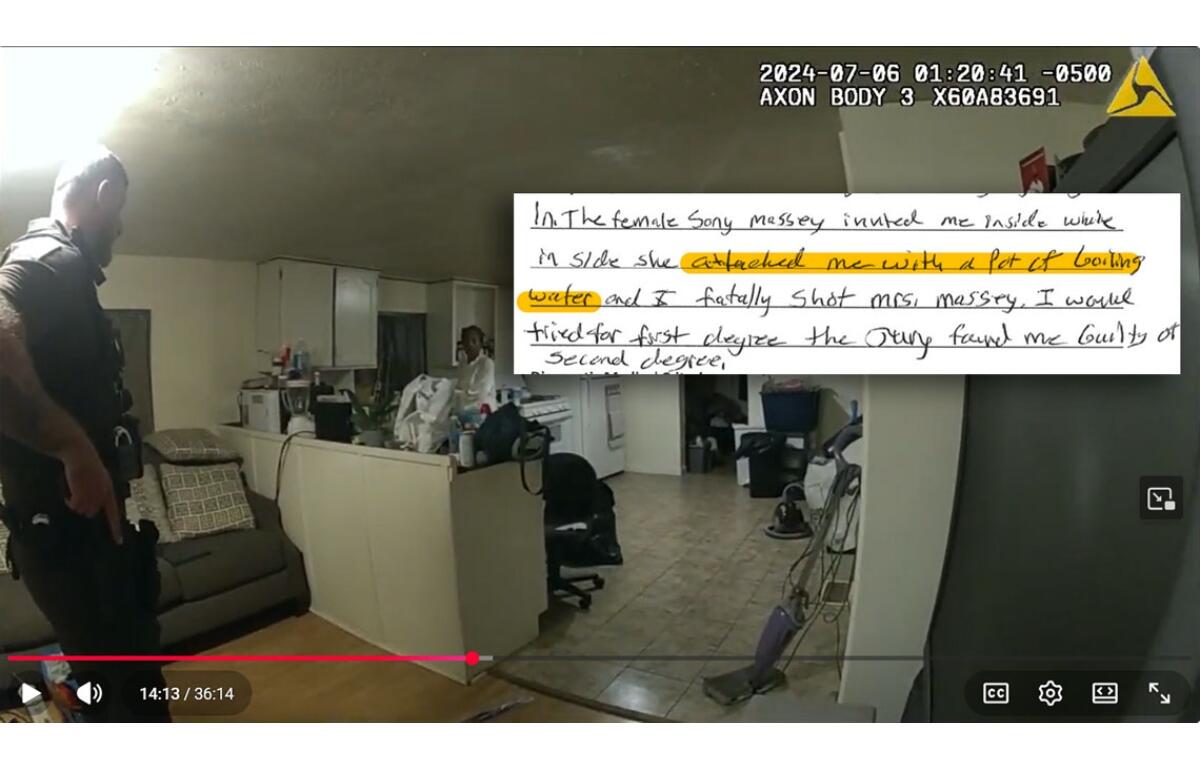

Springfield, IL (CAPITOL NEWS ILLINOIS) – The ex-Sangamon County Sheriff’s deputy convicted of murdering Sonya Massey in her kitchen is asking for medical release from a state prison — and maintaining that Massey “attacked” him.
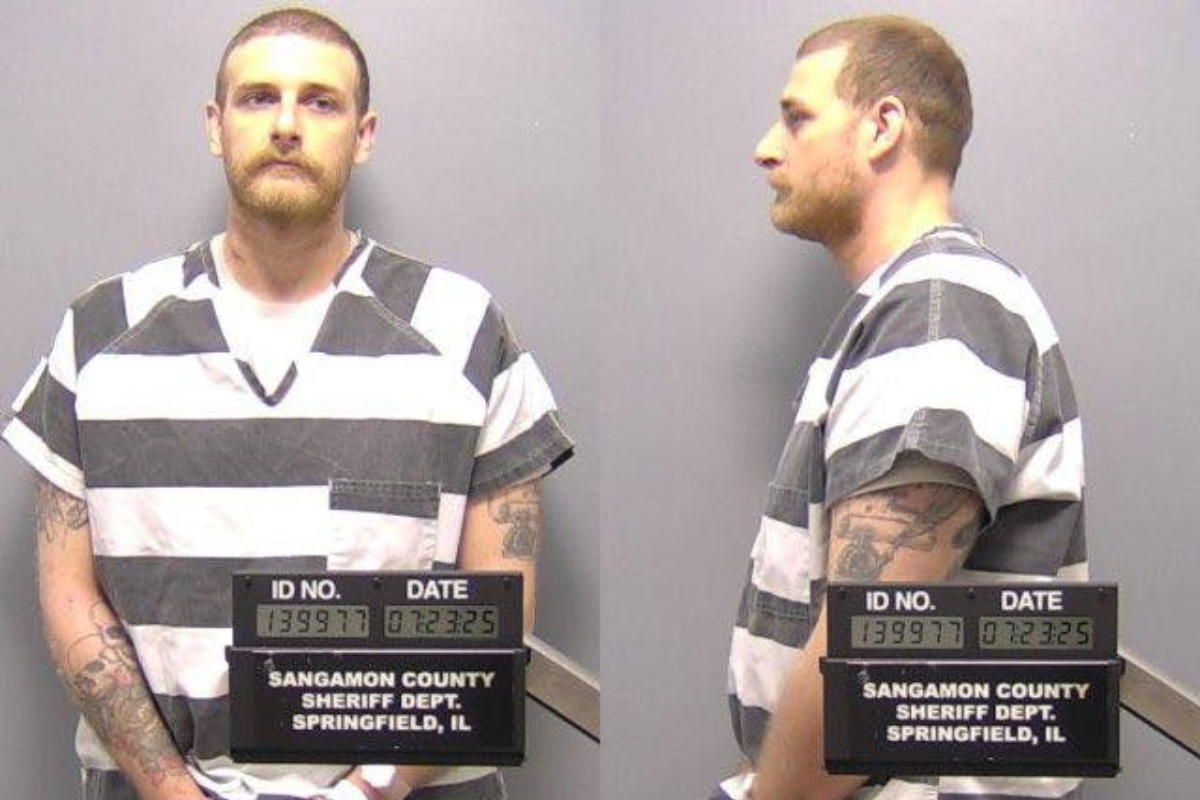
Sean Grayson’s case will go before the Illinois Prisoner Review Board on Friday, less than six months into the 20-year prison sentence he received after being convicted of second-degree murder in October.
He filed for release under the Joe Coleman Act in May, citing symptoms of advanced colon cancer.
In his hand-written application, obtained by Capitol News Illinois via the Freedom of Information Act, Grayson did not show remorse in his description of the shooting, maintaining that Massey attacked him with a pot of boiling water. He also did not check a box stating his condition was likely to lead to his death in the next 18 months.
It’s standard process for the Illinois Department of Corrections to conduct a medical examination following the receipt of an application for release to determine eligibility. In this case, the medical professional, whose name was redacted, did fill in the box that said Grayson was likely to die within 18 months.
But, ultimately, whether Grayson is released will be up to a three-person panel of the state’s Prisoner Review Board. A decision is likely to come after the board meets Friday morning in Springfield, according to the board’s spokesperson.
But if it was up to the state’s attorney who charged Grayson with murder for the July 6, 2024, killing of Massey in Sangamon County, the former deputy will remain in prison.
“Critically, Grayson had cancer when he committed this murder and his medical condition was explicitly considered at sentencing,” Sangamon County State’s Attorney John Milhiser said in a letter opposing Grayson’s release. “To release Grayson under these circumstances would be a miscarriage of justice and an insult to Sonya Massey’s memory and family.”
Sonya Massey’s family also opposes the release.
“He’s a killer. I apologize that he must suffer, but he has to pay for what he did,” Sontae Massey, Sonya Massey’s cousin, told Capitol News Illinois last month.
Murder of Sonya Massey
Milhiser’s letter restates the facts of the case. Massey had called police to report a potential prowler.
A video released after the shooting depicted Grayson and his partner clearing the outside of the house and finding no prowler. Grayson was accompanied by another deputy who had his body camera switched on throughout the encounter. Grayson turned his on seconds after he fired the lethal shots.
The pair at one point appeared ready to leave before Grayson continued to engage Massey and they eventually entered her home to question her further.
Massey had a pot of boiling water on the stove. Under Grayson’s direction, Massey went to the stove to remove it.
“We don’t need a fire alarm here,” Grayson said as Massey went to remove it.
As she did so a deputy backed away and Massey said, “I rebuke you in the name of Jesus.”
Grayson responded, “I’ll f—ing shoot you right in the f—ing face” and drew his gun.
Seconds later, per Milhiser’s letter, “Ms. Massey proclaims that she is “sorry” and drops to the floor. Grayson approaches Ms. Massey and ultimately discharges his weapon three times.”
One shot struck Massey’s head and ultimately killed her.
Milhiser wrote that because Grayson had cancer at that time, he can’t argue the condition makes him less dangerous.
“His temper and willingness to escalate minor misunderstandings into fatal encounters shows that he poses a danger to any person he comes into contact with,” Milhiser wrote in the letter.
In his application, Grayson did not show remorse in describing the offense for which he was convicted.
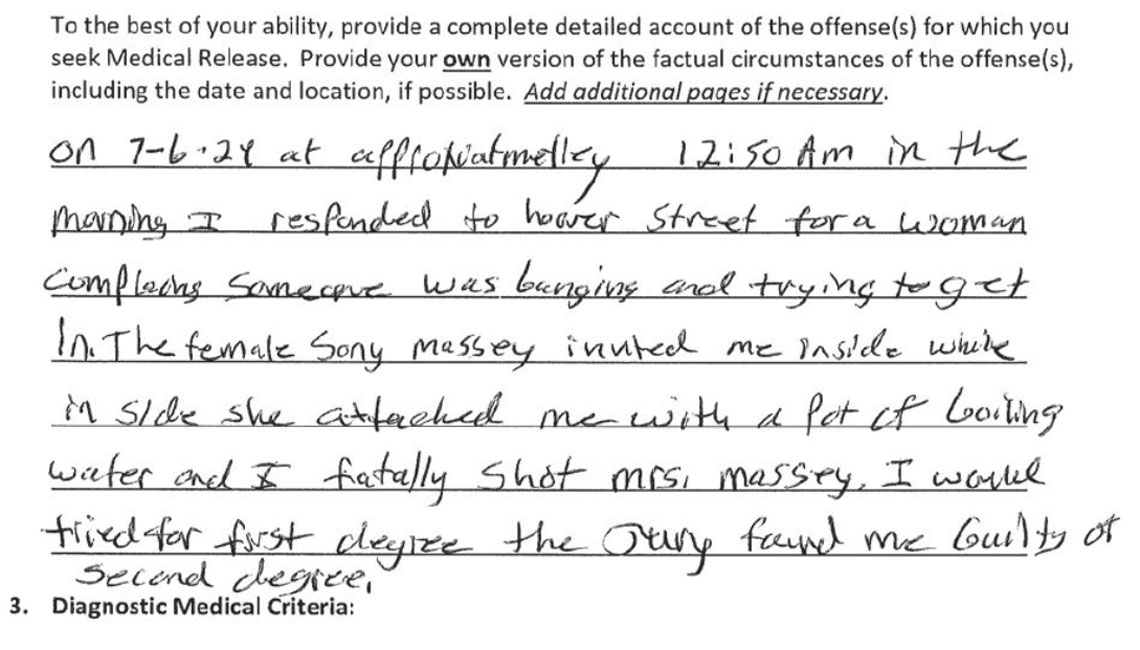
“The female Sony Massey invited me inside,” he wrote by hand, appearing to misspell Massey’s first name. “While inside she attacked me with a pot of boiling water and I fatally shot Mrs. Massey.”
Milhiser’s letter pointed out there was a kitchen island and several feet between the pair when Grayson fired. And that Grayson discouraged his fellow deputy from rendering aid.
As he exited the home, Grayson was greeted by several other officers.
“Yeah, I’m ok. This f—ing b—h is crazy,” he said to his colleagues.
Medical release request
At the time of the shooting, Grayson stood 6-foot-4 and weighed 225 pounds. At his trial last October, he appeared to have lost between 40 and 50 pounds and appeared gaunt.
Doctors diagnosed Grayson with Stage 3 colon cancer in 2023, the year prior to the shooting. His attorney Mark Wykoff told the judge at his sentencing in January that the cancer had progressed to Stage 4 and spread to his liver and lungs.
The Joe Coleman Act applies to people in custody who are terminally ill or medically incapacitated, meaning they have a condition that won’t improve and prevents them from completing daily living tasks without assistance.
Grayson checked the lines saying his condition would incapacitate him within six months and that he had become incapacitated since his sentencing. The medical professional also checked the boxes saying Grayson would be incapacitated within six months and his condition was unlikely to improve.
But the medical professional checked “No” to all eight questions in a series aimed at discerning whether the condition in any way limits Grayson’s daily activities. For example, they responded the condition doesn’t prevent Grayson from dressing, feeding, moving, controlling his bowels or cleaning himself.
Friday’s hearing
Grayson did not request a public hearing, meaning neither he nor a representative will attend Friday’s release hearing, according to a PRB spokesperson. Members of the Massey family, as registered victims, would have the opportunity to testify publicly in the hearing if they wish, according to the spokesperson.
After the hearing, the board will confer privately in a closed session and then announce their decision publicly Friday, according to the spokesperson.
While the medical examiner’s application determines eligibility for release, the decision is at the sole discretion of the Prisoner Review Board.
Under the statute, the PRB can consider the diagnosis and likelihood of recovery, the potential cost of healthcare if there is continued incarceration, the impact that may have on the provision of medical care throughout IDOC, the present likelihood of and ability to pose a danger, and victim statements.
Milhiser argued Grayson is still a danger to the public — a factor the PRB may also weigh, under statute.
“Grayson’s medical condition and the cost of incarceration were considered—and rejected—by the sentencing judge,” Milhiser wrote.
Capitol News Illinois reporter Beth Hundsdorfer contributed to this report.
Capitol News Illinois is a nonprofit, nonpartisan news service that distributes state government coverage to hundreds of news outlets statewide. It is funded primarily by the Illinois Press Foundation and the Robert R. McCormick Foundation.