


 Listen Live
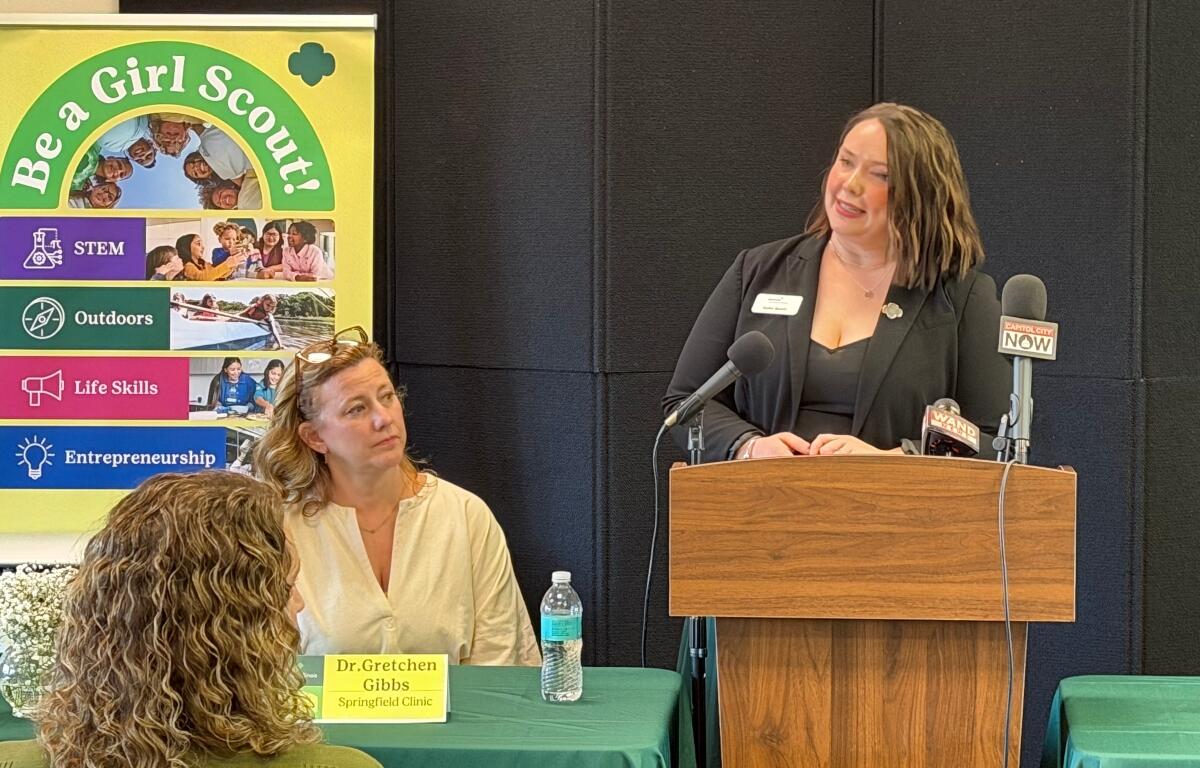

SPRINGFIELD, Ill. (CAPITOL CITY NOW) – Girls have a lot of prolems these days ranging from physical health to mental health, and a local agency is documenting it, including how to improve it.
At a news conference Thursday, the Girl Scouts of Central Illinois (GSCI) released a study called “The Future of Girlhood in Central Illinois.” Problems plaguing society, and not just those some may think of are significant in the 38 counties covered by GSCI.
“This includes the impact of poverty, body dissatisfaction and eating disorders, a decline in healthy habits, athletic participation, STEM (Science, Technology, Engineering, Math) and school engagement gaps, rural isolation, mental health and personal safety, adverse childhood experiences (ACE), digital connectivity, bullying, substance use, and outdoor equity,” said Kaitlin Bostick, GSCI Vice President of Strategy.
Among the findings, 4 in 10 households cannot afford basic necessities, 1 in 6 lack of access to a car which can trigger isolationism, overuse of cellular data while lacking internet access otherwise in order to overcome long transportation to medical facilities, 24 percent of high school girls are bullied, and more than 50 percent reporting persistent sadness or depression.
While the report details potential solutions including not just joining the Girl Scouts, in some cases, pediatricians can be the first line of defense, and the first to provide some practical solutions.
“As physicians, we know how important these foundation habits are,” said Dr. Gretchen Gibbs, Springfield Clinic pediatrician. “Sleep, good nutrition, regular movement. They’re not things we just recommend for physical health. They directly affect our mood, our concentration, our stress, anxiety, energy, and how we feel ourselves.”
Dr. Mackenzie Haywood, a pediatrician with Memorial Health, says she sees it every day.
“I even looked through my clinic for this whole week, and I could fill a whole day with just pediatric teenage girls that I’m treating for anxiety and depression, and even more that are maybe unrecognized anxiety and depression, or resistant to treatment for anxiety and depression.”
The Girl Scouts doesn’t want to call girls themselves, “problems” or “crises;” instead, they refer to a girl’s life as “an extraordinary journey that requires intentional, real-world safe spaces.” Girls are navigating the issues earlier than ever, and need more people than ever willing to help them navigate, and listen.
“What girls need…is less filtering, and more active listening,” said Alivia Hopkins, a high school student in Pleasant Plains, and member of the GSCI board. She says among other ideas is standing by and supporting girls, even as they’re figuring everything out.