


 Listen Live
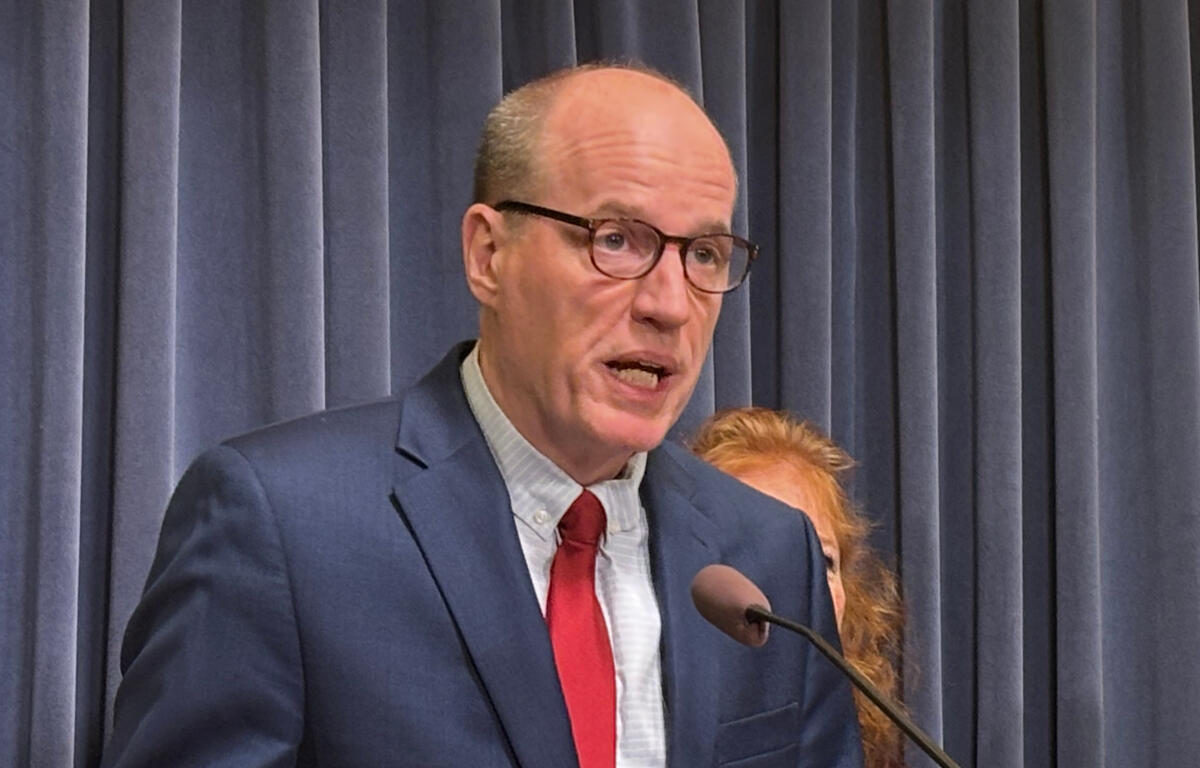

Springfield, IL (CAPITOL CITY NOW) – “I don’t know that there has ever been anything in the history of the country that has become so widely used with so little regulation.”
That’s how State Sen. Bill Cunningham (pictured) (D-Chicago) sums up the current state of artificial intelligence. Another lawmaker, State Sen. Mary Edly-Allen (D-Libertyville), called this “the wild, wild West.”
They spoke at a Capitol news conference introducing eight bills to attempt to regulate AI.
SB 315 would require reporting on internal safeguards by large AI developers.
SB 316 would require AI products to detect suicide triggers and refer the user to help.
SB 317 would require companies to inform you AI, and not a human, is involved in a phone conversation with you.
SB 340 would enable consumers to opt out of having their data used for targeted ads or sold to third parties.
SB 343 would outlaw coordinated rent pricing through a third-party software or algorithm.
SB 415 would limit school use of biometric data to “legitimate instructional purposes.”
SB 416 would prohibit teachers from using AI to issue grades.
SB 318 would stop AI from purchasing entertainment tickets in bulk.
An emailed statement, attributed to OpenAI vice president of global policy Ann O’Leary, says:
“OpenAI supports the Illinois legislature’s efforts to advance frontier AI safety through SB 315. As AI systems become more powerful, clear rules around safety, transparency, incident reporting, and accountability are increasingly important. We believe the U.S. should ultimately have national standards for frontier AI safety, but in the absence of federal action, state efforts like this one in Illinois — alongside legislation already in place in California and New York — are helping to create a de facto nationwide approach.”