


 Listen Live
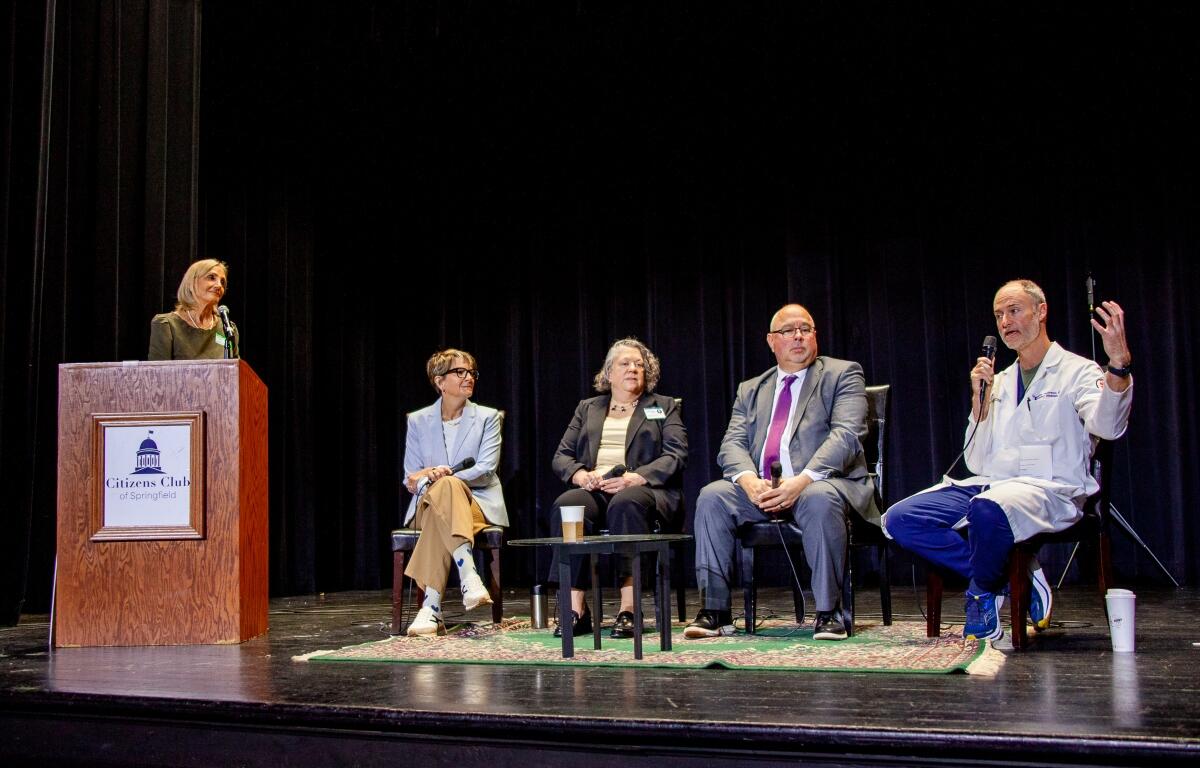

Springfield, IL (CAPITOL CITY NOW) – Healthcare leaders in Springfield are pointing to a range of challenges facing the industry, from rising costs to access to care and long-term patient outcomes.
The concerns were raised during a panel discussion hosted by the Citizens Club of Springfield, where executives from major medical institutions discussed the broader impact of these concerns.
Mandy Eaton, president and CEO of Memorial Health, said while healthcare providers can manage internal operations, they are vulnerable to external policy decisions.
“While we can control much of our costs, there are costs related to policy change that are completely uncontrollable,” Eaton said.
Eaton described the Medicaid reductions as a “cost-shifting measure,” arguing they move financial responsibility to hospitals and local entities such as law enforcement and jails.
Hospital leaders said the changes come as providers already face rising expenses and limited reimbursement growth.
Brian Brennan, president and CEO of HSHS St. John’s Hospital, pointed to the growing gap between increasing operational costs and stagnant government payments.
“Inflation keeps going up, salaries keep going up, and we at best are going to get the same pay that we got as far as reimbursement, but in reality, it’s actually less every year,” Brennan said.
Dr. Christopher McDowell of the SIU School of Medicine said reduced resources could limit access to preventive care, leading to higher long-term costs.
He said patients who cannot receive early treatment are more likely to seek care in emergency departments, which are typically the most expensive setting.
“In the end, the fear is that it will actually add cost to this entire system,” McDowell said.
Leaders also highlighted persistent health disparities in Springfield, including a 23-year life expectancy gap between residents on the West End and around the lake compared to those on the North and East sides.
Rebecca Birenbaum, CEO of Springfield Clinic, said addressing those gaps will require stronger community engagement and trust.
“We need to be better about ensuring the community that they can trust us, that they can come to us and get the care they need in the way that they need it,” Birenbaum said.
Despite the challenges, panelists emphasized that collaboration among local healthcare providers helps sustain specialized care in the region.
Eaton said while competition exists, cooperation plays a larger role in Springfield’s healthcare system.
“There’s more collaboration going on than there is competition in this market,” Eaton said.
McDowell said that partnership is essential for the SIU School of Medicine, which relies on local hospitals for clinical training.
“We don’t have our own hospital,” McDowell said. “So this is the essence of collaboration.”